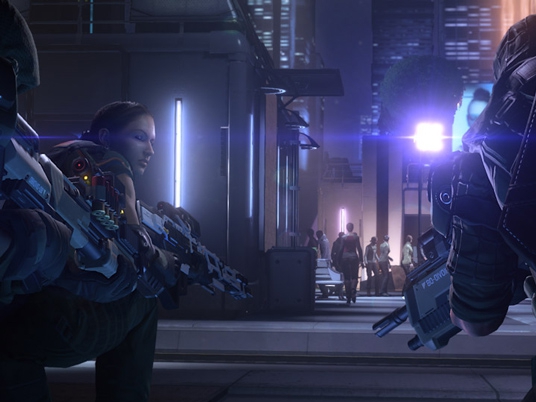
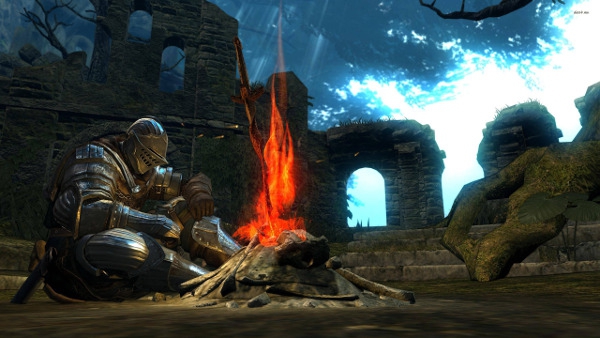
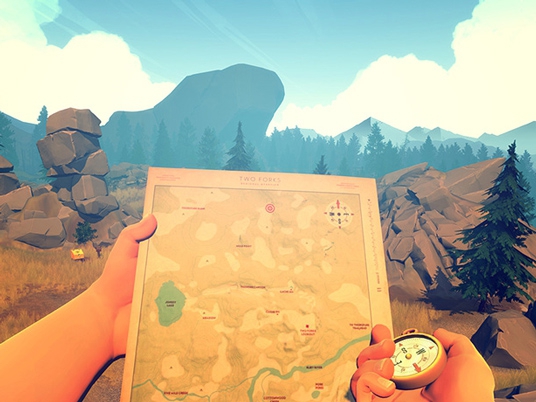
As we watch the year coming to an end, all of us are eagerly awaiting this new decade for the predicted release of some highly anticipated MMO blockbusters. In particular, the one monster MMO that's been hogging a lot of the spotlight is BioWare's ultra-immersive, storyline driven Star Wars: The Old Republic MMO. While BioWare and EA have not yet officially confirmed a 2010 release date, other sources do suggest that they are perhaps pushing for an October 2010 unveiling.
Despite the fact that an official launch won't be seen for at least another half a year, one of the most interesting new concepts revealed for SW:TOR is its unique class mechanics and how each class will contribute to group combat, or if BioWare will even be employing that timeless MMORPG trinity of the healer, the damage dealer and the tank. Either way, we here at ZAM are so psyched about what kind of MMO SW:TOR will be that we've decided to look at some of the released classes to figure out just how they'll fit together into the jigsaw puzzle that is combat.
Blizzard announced its plan to implement a brand-new "Looking For Group" (LFG) system for World of Warcraft last summer, at BlizzCon 2009, built on a similar mechanic used in PvP Battlegrounds. Developers told the crowd they had finally worked out a way to bring cross-server instances to WoW, allowing players from different servers the ability to run the same dungeons together. Although Blizzard originally stated it would be limited to 5-player dungeons in the beginning, it has since announced that a "Looking for Raid" system will accompany the new system.
The new LFG system is already being vetted on the public test realm, set to roll out to the public in the upcoming patch 3.3. Blizzard designed the system with incentives in mind, offering higher rewards to players that group with more randomly-chosen teammates. Many players already support the idea of the new system, especially casual players who don't get the opportunity to run through as many dungeons as regular, "connected" players. Others have their doubts, anticipating even more failed dungeon runs from the inherent pick-up group (PUG) design of the system.
Final Fantasy XIBest of the Best: A Blast from the Past?
It’s been too long since I last saved the world.
As a die-hard fan of the Final Fantasy series, life just feels empty when I’m not locked in an epic struggle between the forces of good and evil.
Don’t get me wrong -- I enjoy the therapeutic soloing on Buburimu Peninsula as much as the next guy. It’s just that I feel more in my element when I’m hurtling toward a lunar foe in the Big Whale, battling my father in depths of Sin or chasing a genetic freak with a ridiculously oversized sword.
About a year and a half ago, my closest linkshell mates and I prevented Ragnarok by the slimmest of slim margins. Since then, the only time I’ve saved the world was in A Crystalline Prophecy -- but that wasn’t epic enough to count.
Final Fantasy XI started feeling less and less like Final Fantasy. Most of my friends from my social linkshell left, and then my dynamis linkshell disbanded as well. Square Enix released A Moogle Kupo d’Etat, but, as was the case with ACP, I just couldn’t convince myself that Vana’diel really needed my help.
Lately, though, I’ve got that feeling in my bones. There’s electricity in the air. Something wicked this way comes. And this time, it really is up to me to stop it. Put an end to the wickedness.
I’m talking about Wings of the Goddess.
It's been a couple of weeks since the release of BioWare's Dragon Age: Origins, and while gamers and reviewers alike are still picking up their collective jaws off the ground regarding this terribly addictive RPG, you can always trust that there will be people who have beaten the game (twice!) and are already imagining just how much potential lies in the vast world of Thedas.
In particular, the first thing that popped into our minds here at ZAM was pretty much what we're always thinking of: MMORPGs. Of course, you could expect nothing less from a team that's devoted to the genre, so today we decided to imagine just what BioWare could do to transform Dragon Age to be one of the most potentially innovative MMOs in the industry (please note that this is pure speculation!).
The pre-order of Sentinel's Fate, the 6th EverQuest II expansion, was announced yesterday with a couple of surprises. There are three packages: a digital download, a retail box, and a collector's edition. There are goodies in the boxes (depending on which you buy) like a copy of EverCracked, Station Cash and a $10 coupon for Sentinel's Fate to entice your friends to play. The really big surprise: players who buy a physical box will have access to the new content 7 days sooner than players who purchase it digitally.
Naturally some brouhaha occured.
The big deal with a 7 day head start is that, for many players, MMOs are competitive games. There are players and whole guilds who play the game as "race to the level cap." They want to be the first to hit level 90, the first to conquer a zone, the first to slay a boss mob, and the world-wide discoverer of Smed's Sword of Ungoldly Uberness.
Welcome to Part II of ZAM.com's revisit to Age of Conan's Hyborian Kingdoms. If you haven't already, be sure to check out Part I of our revisit, where we addressed the early stages of the game and gave an in-depth introduction for players who have only heard of Age of Conan by rumours alone. This week we checked out what looms beyond the compelling Tortage story arc and delved into the biggest problem holding back this stunning game.
In last week's revisits, one of the biggest observations we noticed during our play-through was that these Hyborian Kingdoms are quite sparsely populated, and this serious lack of adventuring fellows made us feel quite lonely - especially once we moved beyond Tortage's awesome solo "destiny" quests. While low populations are a problem for any multiplayer game, MMOs are definitely hit the worst because there are a lot of stigmas involved with joining an established, persistent player base in decline (with little to no fresh blood joining up!).
Last month I came across an editorial by MMORPG columnist Garrett Fuller, titled "Over-Marketing and The Beta Effect;" a blog entry examining the over-hyped campaigns launched by MMO developers and publishers these days, some of which begin years before the game's actual release. Fuller explains the "Beta Effect" as a result of all this publicity, driving too many modern MMO gamers to seek out beta access for all the wrong reasons (i.e., all those but actually testing).
While I agree with most of Fuller's points—which are more detailed than previously mentioned—there's another problem with modern MMO beta testing, and it's a trend that's gained momentum throughout the last few years. Most publishers have adopted the traditional beta testing model as a promotional and marketing tool, widening access by tenfold and offering unique incentives to join up, like head-starts, price discounts and exclusive in-game items. Using beta tests as a promotional tool encourages just about everything except the actual testing, which might be part of the reason why some MMOs face so many unforeseen problems once the floodgates open on launch day.
Of all the months where I get swamped under with work and school, November is definitely the worst of the bunch. Not only is it a time when students around the world sequester themselves in libraries to churn out essays galore, but it also happens to be a time when the gaming world perks up and goes into a development frenzy to catch the Christmas / winter rush in general. Unfortunately, when it comes to most college kids who have to pay their tuition from their own shallow pockets, 'serious' MMO gaming also happens to be one of the first casualties of the ultra packed student schedule.
I noted earlier that 'serious' MMO gaming tends to die as I get busier and busier, and this is mostly due to the fairly hefty time commitments required to really "get into" my MMO sessions. Interestingly enough, however, when I find that my deeper MMO gaming goes down, my 'casual' MMO playing tends to go up; 'casual' being MMOs that are usually very solo friendly and require very little time to really get "into" the game itself. In this way, when I'm feeling burnt out from working on a project, it's a simple matter of firing up one of my many "popcorn" MMOs to get a good, light gaming refreshment. Unfortunately, the one problem with 'popcorn' MMO gaming is that the more popcorn-ish the MMO becomes (as in easy to play, easy to get into and easy to forget), the more it tends to rely on some kind of time extending factor to maintain the façade of depth (massive grind being the typical answer). Either way, while you don't have to work very hard to see everything that my latest chosen popcorn MMO, Valkyrie Sky, has to offer, there is still something to be appreciated in the world's very first MMOSHMUP.
For better or worse, it's finally happening; Blizzard took its first big step into the ever-expanding world of micro-transactions earlier this week, offering two in-game vanity pets for World of Warcraft in its online Blizzard Store. Many players said this day would never come (or at least feared it), while others recognized the company's already-existing services like paid server transfers and faction/race changes, considering them precursors of what's to come.
But did the majority of Blizzard's customers think it would ever come to this, even after the announcement of the company's newly-improved, marketplace-ready Battle.net service, announced at BlizzCon 2009? We knew that Blizzard was prepping alternate revenue models to offer saleable content like maps and mods for games like StarCraft 2 and Diablo III, but many longtime World of Warcraft subscribers assumed their favorite MMO would continue to remain off-limits when it came to buying actual in-game content, even as ineffectual as vanity pets.
If anyone's been keeping up with my various forays into the MMOFPS genre, then you may recall that, while I'm quite fond of this MMO style, I still have yet to see it fully implemented in a satisfactory way. The game that could possibly come closest to fulfilling my MMOFPS desires is, sadly enough, SOE's highly potential but largely ignored Planetside, and that game has not, unfortunately, aged well-especially given that it was released almost seven years ago and has not been updated within at least five of those years. One MMOFPS that I was fond of, but am ashamed to admit to (because it had the shallowness of a puddle), was Flagship Studio's Hellgate: London, and I suspect it mostly had to with the fact that I'm addicted to purple weapons, and I adore procedurally generated loot (which really just translates to lots of random chances at purple weapons).
Either way, enter Gearbox Software's Borderlands, an MOFPS (it's not quite 'massively' in its multiplayer content) that has probably done one of the best jobs thus far in blending the progressive gear-based nature of MMORPGs with the action-packed shooting style of first person shooters. A few days ago, Josh "Waxpaper" Bashara gave you a solid introduction to his first impressions with Borderlands as a game, so today I'll give you all a tour through the multiplayer aspects of Borderlands, as well as let you know why this game sets a pretty significant standard next to which aspiring MMOFPS developers can compare their in-development games..
| « Older |